Baton Rouge properties experience continuous mosquito pressure from April through November due to high humidity, subtropical rains, and low-lying topography near water bodies like BREC's City-Brooks Community Park and…
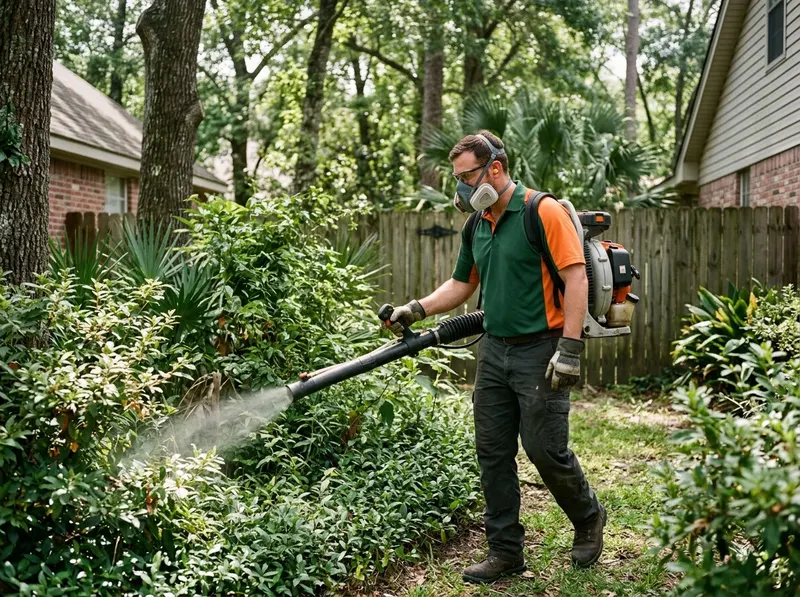
Baton Rouge properties experience continuous mosquito pressure from April through November due to high humidity, subtropical rains, and low-lying topography near water bodies like BREC's City-Brooks Community Park and Bluebonnet Swamp Nature Center. The primary disease vectors in East Baton Rouge Parish, Aedes albopictus (Asian tiger mosquito) and Culex quinquefasciatus (southern house mosquito), rest on the undersides of broadleaf foliage and breed in water reservoirs holding as little as one tablespoon of water. A standard mosquito reduction service relies on a targeted microencapsulated barrier application to lower leaves, fence lines, and foundation shrubs, paired with Bacillus thuringiensis israelensis (BTI) larvicides placed in non-drainable standing water such as birdbaths, French drains, and plant saucers.
Property owners in established, heavily shaded neighborhoods like Southdowns, Garden District, and Spanish Town frequently face intense yard moisture under mature live oaks, while newer developments in Shenandoah and Inniswold often encounter drainage retention swales that sustain mosquito reproduction. For single-event needs such as outdoor weddings or backyard gatherings near Bocage or Tara, an isolated barrier treatment applied 24 to 48 hours prior to the event suppresses adult biting insects during peak twilight periods. For continuous yard protection throughout the Louisiana summer, applications repeat on a 21- to 30-day interval to match the degradation of barrier materials caused by persistent rain and solar exposure. The technical trade-off involves application frequency: single visits eliminate the need for ongoing contracts, whereas 21-day cycles sustain barrier integrity through seasonal afternoon downpours.
A professional mosquito service distinguishes itself from automated misting systems and insect zappers by pinpointing the biological resting sites of females rather than broadly dispensing product across turfgrass, where mosquitoes rarely land. Because treatments target pest harborage zones exclusively, flowering garden beds are avoided to safeguard beneficial pollinators. Initial costs start at the base minimum of $160, with property boundary sizes confirmed directly during the exterior site walk.
Every job gets a firm, written price after a free on-site visit.
Tell us about your mosquito reduction service job in Baton Rouge and we'll send a clear, written quote, usually the same day.
 Quintra Pest Relief