Baton Rouge maintains an average relative outdoor humidity above 73 percent throughout the year, creating persistent indoor micro-climates that support Lepisma saccharinum, firebrats, and springtails. In historic…
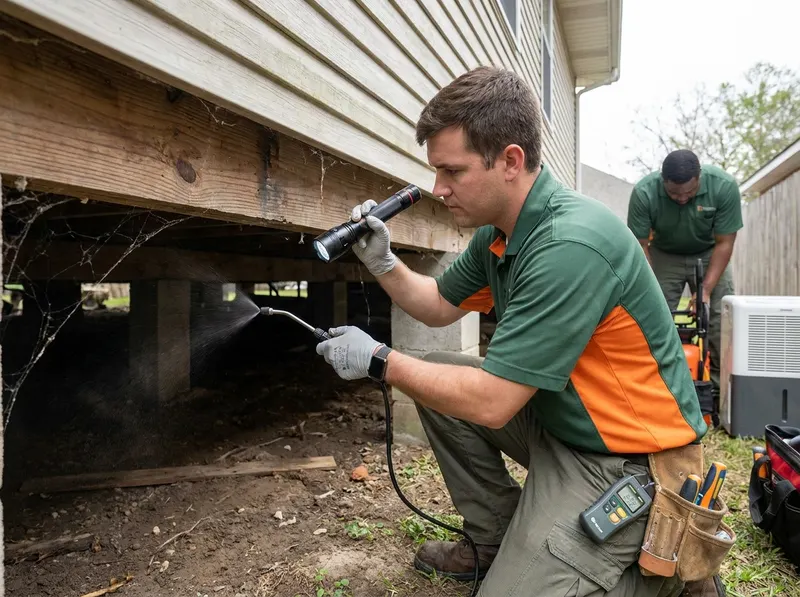
Baton Rouge maintains an average relative outdoor humidity above 73 percent throughout the year, creating persistent indoor micro-climates that support Lepisma saccharinum, firebrats, and springtails. In historic raised-foundation homes throughout Spanish Town and the Garden District, damp crawl spaces draw silverfish upward through floorboards into subfloors, bathrooms, and linen closets. Concrete slab properties across Shenandoah, Broadmoor, and Tara face moisture migration through exterior brick weep holes and plumbing cutouts under double vanities. Silverfish consume polysaccharides found in wallpaper paste, book bindings, insulation backings, and cotton fabrics. Eradication focuses on removing active breeding pockets without unnecessary broadcast chemical applications, restoring sanitary comfort to kitchens, master suites, and storage attics.
Targeted dust applications fit severe infestations isolated inside confined structural zones like attics, ceiling joists, and plumbing chases, whereas perimeter microencapsulated liquid barriers protect exterior perimeters against incoming migration. If silverfish are isolated to single moisture areas like a dripping laundry connection in Mid City or a crawl space in Southdowns, localized void injections resolve the population without whole-house disruption. For homes near standing water zones such as Bluebonnet Swamp Nature Center or Ward Creek in Bocage, external perimeter treatment is necessary because heavy canopy shade delays soil evaporation. The primary trade-off is mechanical drying versus chemical knockdown: insecticide dusts neutralize foraging insects within 48 to 72 hours, but populations can slowly rebound unless relative crawl space or attic humidity drops below 50 percent through mechanical dehumidification, crawl space encapsulation, or improved soffit ventilation.
1. Technicians assess ambient humidity levels across roof rafters, bath vents, and plumbing penetrations using pinless moisture meters.
2. Borate and amorphous silica dusts are injected directly into switch plates, wall voids, and pipe access panels.
3. A 3-foot vertical and 5-foot horizontal residual perimeter barrier is established along exterior foundation walls.
4. Technicians document specific structural moisture breaches, such as leaking supply lines or clogged downspouts, to prevent reinvasion.
Every job gets a firm, written price after a free on-site visit.
Tell us about your silverfish & moisture pest control job in Baton Rouge and we'll send a clear, written quote, usually the same day.
 Quintra Pest Relief